Original vs Genuine vs Counterfeit Lishi: How to Verify
“Original”, “genuine” and “authentic” are used interchangeably in tool listings. They are not the same claim, and none of them is checkable on its own. What you can check is the model code, the card, the published specifications and the seller.
This guide separates the checks that mean something from the words that do not.
What “original Lishi” actually means
Lishi is a brand, not a generic category of tool. An original Lishi tool is one made by Lishi and sold through a channel the brand recognises. A “genuine” badge on a marketplace listing is a marketing word until it is backed by something you can verify.
We have supplied Lishi tools since 2008 as an authorised distributor, with distributor number 002 assigned by Lishi Tools of Qinhuangdao. That is a distributor reference, not a claim to be the manufacturer, and it is explained on our about page.
The five checks you can actually do
1. Match the model code to the listing
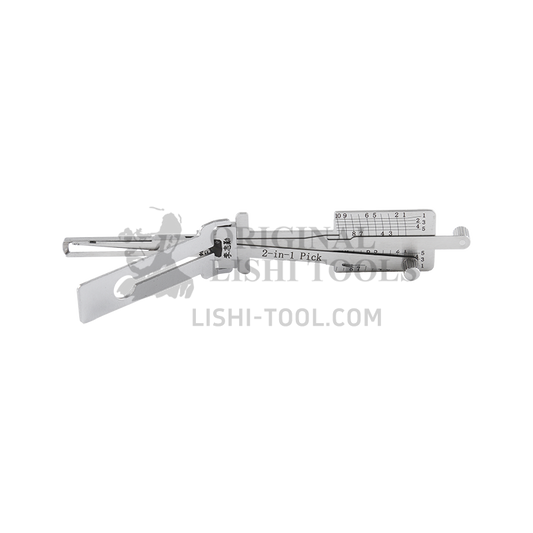
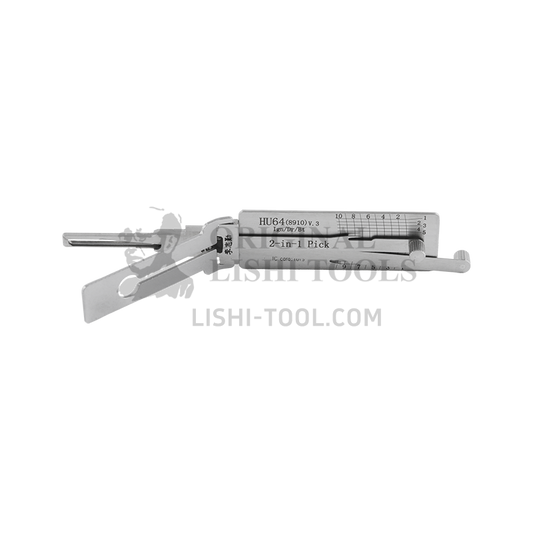
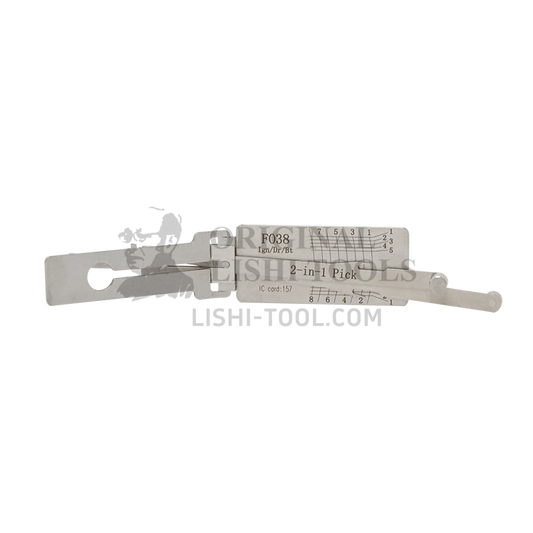
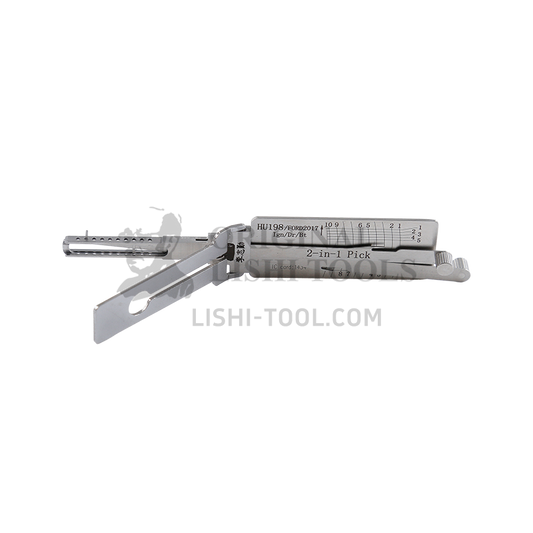
The tool body carries a model code: HU64 v.3, KW1, FO38, TOY43AT. The listing must show the same code. If the seller describes the tool only as “Lishi 2-in-1” without a model, you cannot confirm which keyway you are buying.
2. Check the IC card number against the model
Many Lishi tools ship with an IC card, and the card number belongs to that model: 1019 for the HU64 v.3, 312 for the KW1, 157 for the FO38. A card from a different model shows a different profile and position count. How to read one is covered in our IC card and application chart guide.
3. Compare the published specifications
Model-specific figures are a useful signal: the HU64 v.3 is listed at 90.7 g with side milling and two tracks; the KW1 at 56.0 g with flat milling and a single track; the FO38 at 90 g with flat milling and two tracks. A tool that is wildly off those figures deserves a question before you buy.
4. Look at the body and the scale
Markings should be crisp and consistent with the product photos. The scale should be readable, the moving parts smooth, and the body free of burrs or rough edges. A tool that feels loose out of the box is a support issue whether it is original or not.
5. Check who is selling it
A seller with a verifiable business identity, a physical address, published shipping and return policies, and a catalogue deep enough to answer keyway questions is a lower risk than an anonymous listing. Ours is set out on the business information page.
Red flags in a listing
- Price far below the market for the same model, with no explanation.
- “Lishi-style”, “for Lishi” or “compatible with Lishi” instead of “Lishi”. Those words describe a copy, not the brand.
- No model code and no cut count. Without both, the keyway is a guess.
- No IC card where the model normally ships with one.
- A seller who cannot answer which lock position or cut count the tool covers.
- Only stock images, no photograph of the actual tool body marking.
- “Official” claims with no distributor reference or verifiable business details.
What weight and dimensions can and cannot prove
A mismatch against the published figures is a reason to ask questions. A match is not proof of origin: a copy can be built to the same weight, and genuine batches can vary slightly. Use weight as one signal among several, never as the only test.
A practical pre-order checklist
- Confirm the keyway on the key or cylinder — not from the vehicle badge.
- Confirm model, cut count and lock position against the listing.
- Confirm the IC card number if the listing publishes one.
- Ask for a real photo of the tool body marking if the listing only shows stock images.
- Check the seller’s business details and policies before paying.
- Use a payment method with buyer protection for first orders.
Three ways copies show up in the market
Generic tools with no brand. Sold as a “2-in-1 pick and decoder” with no model code. They are not pretending to be Lishi, but they are often compared to it on price. The keyway and scale quality are the variables.
“Compatible with Lishi” listings. The wording borrows the brand without claiming it. Read the title carefully: “for Lishi”, “Lishi-style” and “fits Lishi” describe a different product.
Listings that use Lishi photos but ship something else. This is the case the checklist above is built for. A real photo of the tool body marking, plus the model code and card number, is usually enough to tell the difference before you pay.
Frequently asked questions
Is “genuine Lishi” the same as “original Lishi”?
The words are used loosely. What matters is whether the seller can show a distributor reference and a verifiable business identity.
Can I identify a counterfeit by weight alone?
No. Weight is one signal. Model code, IC card, scale quality and seller identity matter more.
Does a missing IC card mean the tool is fake?
Not necessarily. Cards can be lost or not included in a particular pack. Ask the seller which card belongs to the model, and compare the answer with a published reference.
Why is the same model cheaper on some marketplaces?
Channel, warranty and authenticity risk all affect price. A lower price is not proof of a copy, but it is a reason to run the checks above.
What if I already bought a copy?
Check the seller’s return policy first. If the listing described a Lishi tool and delivered something else, that is a misdescription — document the model code and the card before contacting the seller.
Where to verify with us
Our tool finder maps keyways to models, the manuals and compatibility charts page collects the reference material, and the full catalogue shows the model code, cut count and IC card for each listing. If something does not match, send a photo through the contact page and we will confirm before you order.
For the selection logic behind the model codes, read Which Lishi tool do I need.